
Working group on maritime logistics
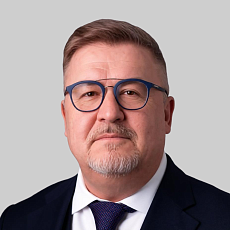
Sergey Sidorov
Leader
Vice President, FESCO Transportation Group
Objectives of the Working group
- Organization and coordination of efforts to enhance the efficiency of maritime transport as an integral part of multimodal transportation via the territory of the Russian Federation.
- Facilitating the development of a corresponding national and international legal framework for regulating maritime transport as a component of multimodal transportation.
- Promoting maritime services of Russian enterprises in international markets and coordinating market players to create a synergistic effect when launching new sea routes from ports of the Russian Federation.
Tasks of the Working group
- Addressing issues related to the development of maritime shipments to/from China, Japan, the Republic of Korea, Southeast Asian countries, ports of India, Latin America, Turkey, Egypt, and other regions via seaports of the Russian Federation; utilizing the transit potential of the Northern Sea Route, combinations of sea and rail transport along the Trans-Siberian route, including the implementation of electronic document management, monitoring delivery times, ensuring cargo security, applying competitive through rates, simplifying customs procedures, etc.
- Developing measures and proposals to enhance competitiveness and expand the geography of maritime container services to attract additional cargo volumes on the "APR countries - EU countries - APR countries" route, including utilizing the potential of maritime transit via the Northern Sea Route.
- Coordinating interaction between railways, road carriers, maritime carriers, and seaports in organizing multimodal transportation.
- Promoting multimodal services of CCTT members on trans-Eurasian routes and maritime transit via the Northern Sea Route as an alternative to international ocean container lines via the Suez Canal on the international transport services market.
Key areas of Activity for the Working group
- Organizing and conducting meetings of the CCTT Working Group on Maritime Logistics to address issues within the context of discussed and resolved tasks, including: exchanging information on the current status of foreign trade maritime services with transshipment at Russian seaports, as well as on constraining factors and measures being taken to develop Euro-Asian container transportation by sea, rail, and multimodal means;
- Expanding the infrastructure capabilities of railways, access roads, and seaports;
- Ensuring alignment between transportation volume planning and border crossing capacities;
- Digital transformation through enabling paperless transportation and creating a unified information space;
- Monitoring, ensuring traffic safety and cargo security, including through the use of new-generation electronic navigation seals with partially recorded/embedded information from shipping documentation;
- Formulating and implementing new transport products.
- Reviewing documents, reports, and events related to current regulatory legal acts in the field of maritime transport as part of multimodal transportation on various relevant routes.
- Holding working meetings with relevant authorities (Russian Federal Customs Service, Russian Ministry of Transport) regarding the procedure and timing of customs inspection procedures for transit goods at checkpoints, concerning the potential cancellation of such procedures or their conduct in exceptional cases, as well as simplifying the procedure for transporting dangerous goods in transit from Europe to Asia via Far Eastern ports.
- Conducting CCTT events to promote the maritime transport services of Russian companies along separately agreed-upon routes.
- Participation in the compilation of an annual bulletin on the issues of maritime foreign trade transportation as an integral part of international trans-Eurasian transportation.
Outcomes
In 2024–2025, CCTT member companies launched new liner container services:- FESCO Transport Group's intermodal container service between Laos and Russia via the Vietnamese port of Da Nang. Transit times from Laos to Vladivostok and then on to Moscow are approximately 35 days;
- FESCO Transport Group’s Sea container service between South Africa and Russia via the Indian port of Nava Sheva and Jebel Ali (UAE);
- Ruscon's sea service from Russia to Cuba focuses on the transportation of consumer goods;
- Ruscon's sea service for the delivery of consolidated cargo from Israel to Russia. The service is designed to transport a wide range of goods, including hazardous goods and chemicals;
- Transit's FETLED Express service has added the port of Colombo to its route, enabling the development of cargo flows from India, the UAE, Sri Lanka, and other Middle Eastern countries.