
Working group of the International Transport Corridor "North–South"

Oleg Poleev
Leader
Head of the Working Group, General Director of JSC «RZD Logistics»

Samaneh Alipour
Leader
Head of the Working Group, General Director of «Behineh Tarabar Azhour Co., Ltd.»
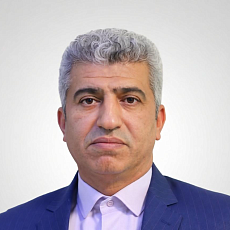
Morteza Jafari
Leader
Head of the Working Group, Vice-President of Railway of the Islamic Republic of Iran
Objectives of the Working group
- Development and implementation of согласованные approaches to the comprehensive development and promotion of the North–South International Transport Corridor.
- Organization and coordination of efforts to enhance the competitiveness of the North–South International Transport Corridor and ensure growth in international freight traffic volumes along this route.
- Increasing the investment attractiveness of infrastructure, including through synchronizing plans for corridor infrastructure development, including the creation of a supporting transport and logistics chain.
- Facilitating the development of an appropriate international legal framework for regulating transportation along the East–West International Transport Corridor.
Tasks of the Working group
- Development of a strategic development concept for the North–South International Transport Corridor.
- Promotion of the route, development of proposals for incentive and marketing measures.
- Creation of a unified trade and logistics digital platform for the North–South International Transport Corridor.
Key areas of Activity for the Working group
- Information sharing on the current transportation situation along all routes of the International Transport Corridor "North-South".
- Analysis of constraining factors and development of proposals to overcome them.
- Forecasting the volume and nomenclature of cargo flows from the perspective of their regional distribution.
- Ensuring alignment between transportation volume planning and border crossing point capacity.
- Synchronization of national infrastructure development plans for the ITC "North-South", including the formation of a network of consolidation and distribution transport and logistics centers at key points along the corridor routes.
- Formation of competitive end-to-end rates through the application of special tariffs by all transportation participants, tax incentive measures, and the development of an innovative system of corridor benefits and preferences.
- Implementation of digital technologies and formation of a "unified information space" for corridor transportation;
- Development of an automated system for interaction between customs authorities, railways, and operators (forwarders) participating in the transportation process along the entire corridor route;
- Development of measures to increase the route speed of container trains.
- Ensuring service regularity and delivery time guarantees, including through the introduction of innovative technologies, electronic document management, and integrated schedule slots.
- Ensuring cargo monitoring and security, and informing clients about cargo location and status, including through the use of electronic seals.
- Simplification of customs procedures during border crossings.
- Development of transport services for combined "North-South" and "West-East" routes;
- Ensuring reverse loading of the corridor with cargo from Iran, India, and the Arabian Peninsula countries.
- Addressing financial logistics issues, including payment settlement mechanisms and insurance, including through the establishment of joint ventures;
- Review of documents, reports, and events related to current regulatory legal acts in the field of transportation.
- Conducting marketing events at international transport and logistics conferences and exhibitions to promote container services of CCTT member companies on the international transport services market.
- Maintenance of a web portal publishing information on infrastructure projects and transportation dynamics along the ITC “North-South”.